
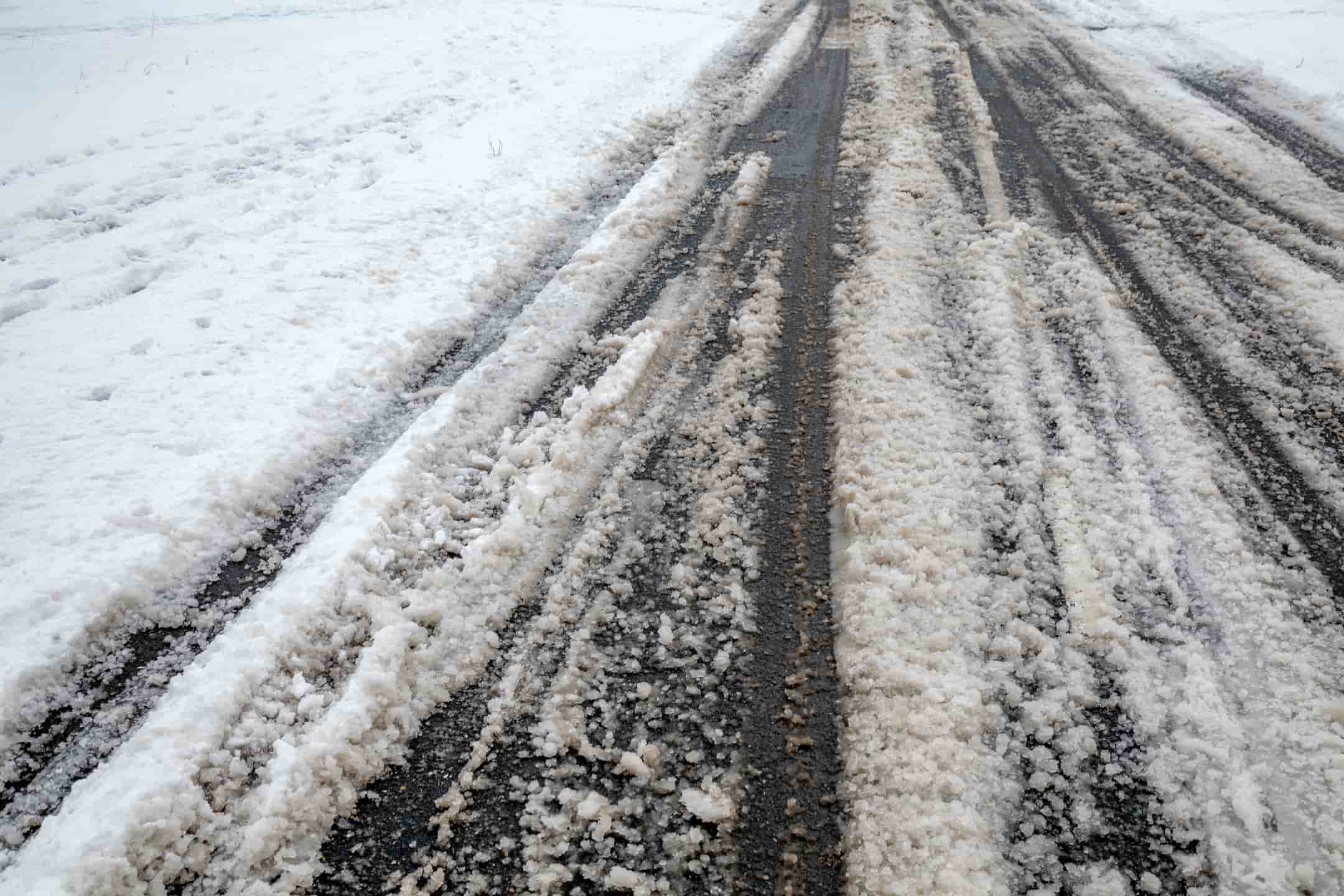
How road salt and brine attack your car's finish goes far beyond a little white residue on the doors. In Carthage and Webb City, where winter storms mean repeated treatments with salt, liquid brine, and even sand, that buildup can quietly erode your paint, clear coat, and undercarriage if you don't stay ahead of it.
The Chemistry of Winter Damage
When highway crews spread salt or spray brine, they create a chemical solution that lowers the water's freezing point, keeping roads drivable. Mix that with slush and tire spray, and your vehicle is coated in a salty film that clings to the paint, wheels, and undercarriage.
On metal, that salty moisture acts as an electrolyte, accelerating oxidation and turning bare steel into rust much faster than plain water alone. Once rust starts inside seams or on the frame, it can spread under coatings and into structural areas that are expensive to repair.
How Road Salt, Brine, and Sand Attack Paint
Salt crystals themselves are slightly abrasive, so as they dry on your panels, they create tiny scratches in the clear coat. Those micro-scratches allow more moisture and dissolved road salt to penetrate into lower layers, eventually causing dulling, etching, and peeling of the finish.
Liquid brine is even more insidious because it flows into chips, door seams, rocker panels, and around emblems where you rarely look. Over time, you may see chalky spots, bubbling paint near the bottom edges of doors, and orange specks where the corrosion has finally broken through.
Why the Undercarriage Suffers Most
Underneath the car, there's no styling—just exposed metal, fasteners, brake and fuel lines, exhaust, and suspension parts constantly blasted by salty slush. Salt and brine can sit in pockets on crossmembers, inside frame rails, and on brackets for days after a storm, especially when temperatures bounce above and below freezing.
As corrosion progresses, you may end up with weakened brake lines, thin frame sections, rusty exhaust components, and stubborn suspension bolts that fail inspection or make repairs more difficult. Even if you don't see visible rust flakes yet, the process may already be underway in seams and welds.
Actionable Protective Steps for Carthage and Webb City Drivers
-
Wash Promptly After Storms
Don't wait until spring; rinsing off salt within a few days after driving on treated roads greatly slows rust formation. Choose a wash that includes a strong underbody spray to flush salt from hidden frame pockets and suspension components. -
Focus on Frequency, not Perfection
In peak winter, shorter, more frequent washes beat an occasional “perfect” detail because fresh salt is constantly being reapplied. Making Hurricane Carwash a regular stop after major salting events prevents buildup from taking hold. -
Add a Protective Barrier
A quality wax or sealant provides your clear coat with an extra sacrificial layer, making it harder for salt and brine to reach the bare paint. For the underside, professional rust-inhibiting coatings or oil-based treatments can help shield exposed metal and slow future corrosion. -
Inspect the “Salt Traps”
A couple of times each winter, check the lower door edges, rocker panels, wheel wells, and the area behind the wheels for early rust spots or bubbling paint. Catching these signs early allows you to address small chips or surface rust before they become structural issues.
By understanding how salt, brine, and sand affect your vehicle, you can treat winter car care in Carthage and Webb City as protection, not just cosmetics. Pair smart habits at home with regular visits to Hurricane Carwash, and you dramatically cut the odds that a few snowy weeks will cost you a frame, brake, or paint job years too soon.