
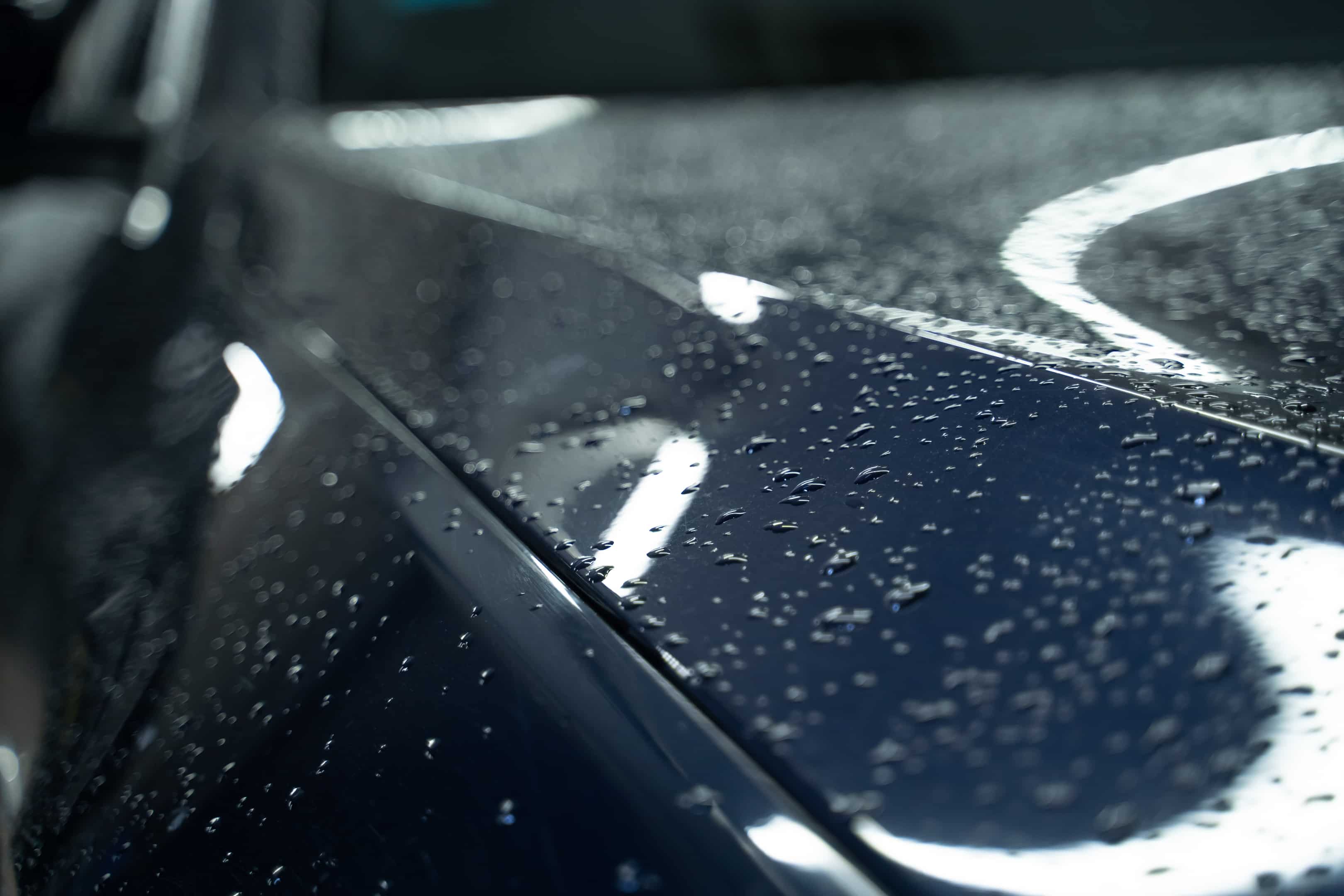
Winter paint damage often starts in the fall, when sap, droppings, and wet leaves sit on your car for days. A fresh layer of wax before the salt trucks roll gives your finish a barrier, and the right choice depends on how you drive and where you park.
What Is Ceramic Wax, and How Is It Different From Carnauba?
So, what is carnauba wax? It comes from the leaves of the carnauba palm, and it’s the most common natural ingredient in automotive waxes because of its hardness, high melting point, and deep, glossy finish.
Ceramic wax takes a different approach. It’s built on silica, the same ingredient that gives professional ceramic coatings their water-shedding, UV-resistant protection. The biggest difference between ceramic coating and wax is application. Professional coatings bond chemically with the clear coat and require thorough surface prep, while a ceramic layer at Hurricane goes on during your wash.
What Fall Does to Your Car’s Paint
Researchers list bird droppings, tree sap, acid rain, and UV exposure among the main threats to a vehicle’s exterior. Autumn delivers plenty of the first two. Tree sap on car roofs and hoods gets harder to remove the longer it sits, and parking under trees during leaf drop leaves your paint exposed every day. A layer of wax gives those contaminants something to land on besides your clear coat.
Ceramic Wax vs. Carnauba: Which Protects Better?
Both protect your paint, but in different ways. Carnauba wax delivers depth and warmth, but natural waxes also wear down from detergents and need frequent reapplication. Wax blends made with synthetic ingredients such as silicones provide stronger protection against UV radiation and environmental pollutants than natural wax alone.
In short, ceramic is the pick for protection through salt season, while carnauba still wins on showroom glow.
Which Wax Is Right for Your Car?
The right wax depends less on the car you drive and more on how you use it. Find the description that fits you, and you’ll know which add-on to choose next time you take your car through a Hurricane Carwash location.
-
Daily Drivers Parked Outside: Ceramic car wax adds a water-repelling layer that helps slush and salty spray slide off.
-
Classic and Show Cars: Carnauba brings out deep gloss. Our guide to taking a classic vehicle through a car wash covers what to know first.
-
Every Car in Winter: Pair either wax with an undercarriage wash to rinse salt from brake lines and the frame.
Both waxes are available in our higher-tier touch-free and soft-touch packages.
Why Waxing Before Winter Makes Road Salt Easier to Wash Off
The Missouri Department of Transportation spreads an average of 100,270 tons of salt each winter. A slick, water-repelling layer gives that salty brine less to grip, so each wash removes more. Because every wax wears down, regular washes keep the barrier in place, and a Hurricane membership makes that easy through the coldest months. For a closer look at the damage, read how road salt damages your car’s paint and whether a winter car wash helps prevent rust.
Don’t wait for the first snow to protect your paint. Visit Hurricane Carwash today, choose a soft-touch or touch-free package with carnauba or ceramic wax and an undercarriage wash, and drive into winter with a finish that’s ready for it. All three locations are open 24 hours a day.